Friday, December 28, 2012

The Publican

Hello all, I would like take a quick moment to point you in the direction of a blog of a friend: The Publican. While most of you know I do not post very often and when I do my posts generally tend to be a little long-winded, my friend Adam posts nearly every day and they are general concise and to the point. So, go to him for a good daily dose of gospel and grace.

Why "the publican"? Well, Adam answers that in his own words:
In Luke 18:9-14 we find a parable written to those who trusted in their own goodness and righteousness.  Jesus proceeded to tell these prideful people that it was the Publican (the sinful tax collector) who was justified by faith rather than the Pharisee (the seemingly proper, collected, squeaky clean religious man).  Why?  Because while the Pharisee was publicly boasting of his own goodness the Publican shows us the definition of godly humility and repentance by not even being able to lift his head to heaven but rather beating on his chest screaming “Lord, be merciful to me a sinner!”
So why name my blog The Publican?  Simple.  It is a straight forward statement of who I am, who I know myself to be, and why I love Jesus Christ, the God-Man so very much.  If it weren’t for the righteousness of Christ I have no hope nor plea.  The new look to the blog is simple to focus on content but don’t worry, all those precious little sidebar widgets are at the bottom of the page, so be sure to check them out.  Every time you come here and read something on my blog I want you to be reminded that you are reading the the thoughts of a mere Publican pilgrimaging on a path to paradise found in Christ.  I happily boast of being morally bankrupt.  May you join me in the Publican’s refrain and find that the end of yourself is the start of everything God has for us in Christ:

“Lord be merciful to me a sinner.”

Lord, like the publican I stand,
And lift my heart to Thee;
Thy pardoning grace, O God, command,
Be merciful to me.
I smite upon my anxious breast,
Overwhelmed with agony;
O’ save my soul by sin oppressed,
Be merciful to me.
My guilt, my shame, I all confess,
I have no hope nor plea
But Jesus’ blood and righteousness;
Be merciful to me.
Here at Thy cross I still would wait,
Nor from its shelter flee,
But Thou, O God, in mercy great,
Art merciful to me.
(Thomas Raffles, 1831)
Go check it out: The Publican. It would be a good thing to start reading for the new year.

By His Grace,
Taylor

Tuesday, December 25, 2012

Advent: Day 24

Merry Christmas! Today, we celebrate the birth of our King, God, Prophet, and Priest. This is what we have been preparing for in our meditations and devotions over the past twenty-three days. I know you are spending time with family today and that is a good thing, but take some time to dwell on this verse, which I believe sums up Christmas in a single sentence:
For you know the grace of our Lord Jesus Christ, that though he was rich, yet for your sake he became poor, so that you by his poverty might become rich. (2 Co. 8:9)
I would like to end this Advent series with the words to my favorite Christmas hymn, "Hark! the Herald Angels Sing" by Charles Wesley:

Hark! The herald angels sing,
"Glory to the newborn King;
Peace on earth, and mercy mild,
God and sinners reconciled!"
Joyful, all ye nations rise,
Join the triumph of the skies;
With th’angelic host proclaim,
"Christ is born in Bethlehem!"

Refrain:
Hark! the herald angels sing,
"Glory to the newborn King!"

Christ, by highest Heav’n adored;
Christ the everlasting Lord;
Late in time, behold Him come,
Offspring of a virgin’s womb.
Veiled in flesh the Godhead see;
Hail th’incarnate Deity,
Pleased with us in flesh to dwell,
Jesus our Emmanuel.

Refrain

Hail the heav’nly Prince of Peace!
Hail the Sun of Righteousness!
Light and life to all He brings,
Ris’n with healing in His wings.
Mild He lays His glory by,
Born that man no more may die.
Born to raise the sons of earth,
Born to give them second birth.

Refrain

Come, Desire of nations, come,
Fix in us Thy humble home;
Rise, the woman’s conqu’ring Seed,
Bruise in us the serpent’s head.
Now display Thy saving power,
Ruined nature now restore;
Now in mystic union join
Thine to ours, and ours to Thine.

Refrain

Adam’s likeness, Lord, efface,
Stamp Thine image in its place:
Second Adam from above,
Reinstate us in Thy love.
Let us Thee, though lost, regain,
Thee, the Life, the inner man:
O, to all Thyself impart,
Formed in each believing heart.

Refrain

By His Grace,
Taylor

Monday, December 24, 2012

Advent: Day 23

This is the final day of Advent this year. It is Christmas Eve, which means tomorrow we celebrate the birth of our Lord and Savior, Jesus Christ. Today's reading comes from the last book of the Bible, looking forward to the second Advent (second coming) of Jesus:
1 Then I saw in the right hand of him who was seated on the throne a scroll written within and on the back, sealed with seven seals. 2 And I saw a mighty angel proclaiming with a loud voice, "Who is worthy to open the scroll and break its seals?" 3 And no one in heaven or on earth or under the earth was able to open the scroll or to look into it, 4 and I began to weep loudly because no one was found worthy to open the scroll or to look into it. 5 And one of the elders said to me, "Weep no more; behold, the Lion of the tribe of Judah, the Root of David, has conquered, so that he can open the scroll and its seven seals."
6 And between the throne and the four living creatures and among the elders I saw a Lamb standing, as though it had been slain, with seven horns and with seven eyes, which are the seven spirits of God sent out into all the earth. 7 And he went and took the scroll from the right hand of him who was seated on the throne. 8 And when he had taken the scroll, the four living creatures and the twenty-four elders fell down before the Lamb, each holding a harp, and golden bowls full of incense, which are the prayers of the saints. 9 And they sang a new song, saying,
"Worthy are you to take the scroll
    and to open its seals,
for you were slain, and by your blood you ransomed people for God
    from every tribe and language and people and nation,
10 and you have made them a kingdom and priests to our God,
    and they shall reign on the earth."
11 Then I looked, and I heard around the throne and the living creatures and the elders the voice of many angels, numbering myriads of myriads and thousands of thousands, 12 saying with a loud voice,
"Worthy is the Lamb who was slain,
to receive power and wealth and wisdom and might
and honor and glory and blessing!"
13 And I heard every creature in heaven and on earth and under the earth and in the sea, and all that is in them, saying,
"To him who sits on the throne and to the Lamb
be blessing and honor and glory and might forever and ever!"
14 And the four living creatures said, "Amen!" and the elders fell down and worshiped. (Re. 5:1-14)
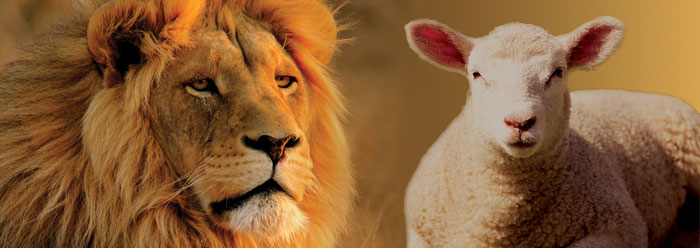
Worthy is Jesus because He was slain and by His blood He ransomed God's people. He is the lion and the lamb at the same time. Christmas proclaims the event of Jesus' birth but we know that He was born so that about thirty years later He might die for His people. It is in this very death that He showed He is worthy of all praise, glory, and honor. Unfortunately, since we live in a fallen world, He still does not get the praise He deserves from humanity, even from the Church. But, one day He will return and set things right, and on that day "every knee should bow, in heaven and on earth and under the earth, and every tongue confess that Jesus Christ is Lord, to the glory of God the Father." (Php. 2:10-11)

Oh Lord, haste that day!

By His Grace,
Taylor

Sunday, December 23, 2012

Advent: Day 22

Today is the fourth and final Sunday of Advent. Last Sunday we started looking directly at the Christmas story itself, and we read from Mt. 1:18-25 and Lk. 2:1-7. Today we are going to continue to look at the Christmas story itself:
1 Now after Jesus was born in Bethlehem of Judea in the days of Herod the king, behold, wise men from the east came to Jerusalem, 2 saying, "Where is he who has been born king of the Jews? For we saw his star when it rose and have come to worship him." 3 When Herod the king heard this, he was troubled, and all Jerusalem with him; 4 and assembling all the chief priests and scribes of the people, he inquired of them where the Christ was to be born. 5 They told him, "In Bethlehem of Judea, for so it is written by the prophet:
6 "'And you, O Bethlehem, in the land of Judah,
    are by no means least among the rulers of Judah;
for from you shall come a ruler
    who will shepherd my people Israel.'"
7 Then Herod summoned the wise men secretly and ascertained from them what time the star had appeared. 8 And he sent them to Bethlehem, saying, "Go and search diligently for the child, and when you have found him, bring me word, that I too may come and worship him." 9 After listening to the king, they went on their way. And behold, the star that they had seen when it rose went before them until it came to rest over the place where the child was. 10 When they saw the star, they rejoiced exceedingly with great joy. 11 And going into the house they saw the child with Mary his mother, and they fell down and worshiped him. Then, opening their treasures, they offered him gifts, gold and frankincense and myrrh. 12 And being warned in a dream not to return to Herod, they departed to their own country by another way. (Mt. 2:1-12)
Before we move on to the second reading for today, I would like to talk about this one a little. R. C. Sproul once said, "In the tiny land of Palestine, two kings were alive at the same time and at the same place. One of the kings was about seventy years old; the other king was an infant. The big king was evil; the little king was pure. The big king was rich and powerful; the little king was stricken by poverty. The big king lived in an opulent palace; the little king lived in a stable. The little king's mother was a peasant girl; His adopted father was a carpenter." (Christ in Christmas Family) Of course, the "big king" to whom Sproul refers is Herod. He was the king of Judea at Christ's birth, yet he was only that because Rome made him so. He did not deserve to sit on that throne, the "little king" did. That is why Herod was troubled by the Magis' revelation that the prophesied King of the Jews had been born—he knew in his heart that he did not deserve the throne. As the story above goes on to say, when the Magi never returned to Herod, he went on a rampage killing all the infant boys in Bethlehem. We know, however, that the "big king" did not succeed in defeating the "little king." In fact, if it were not for the story of the "little king," the "big king" would have disappeared from history altogether. This story reminds us that even the most powerful cannot stop the plan of God. Herod had the power to slaughter many, yet he could not stop the plan of God. Nothing can.
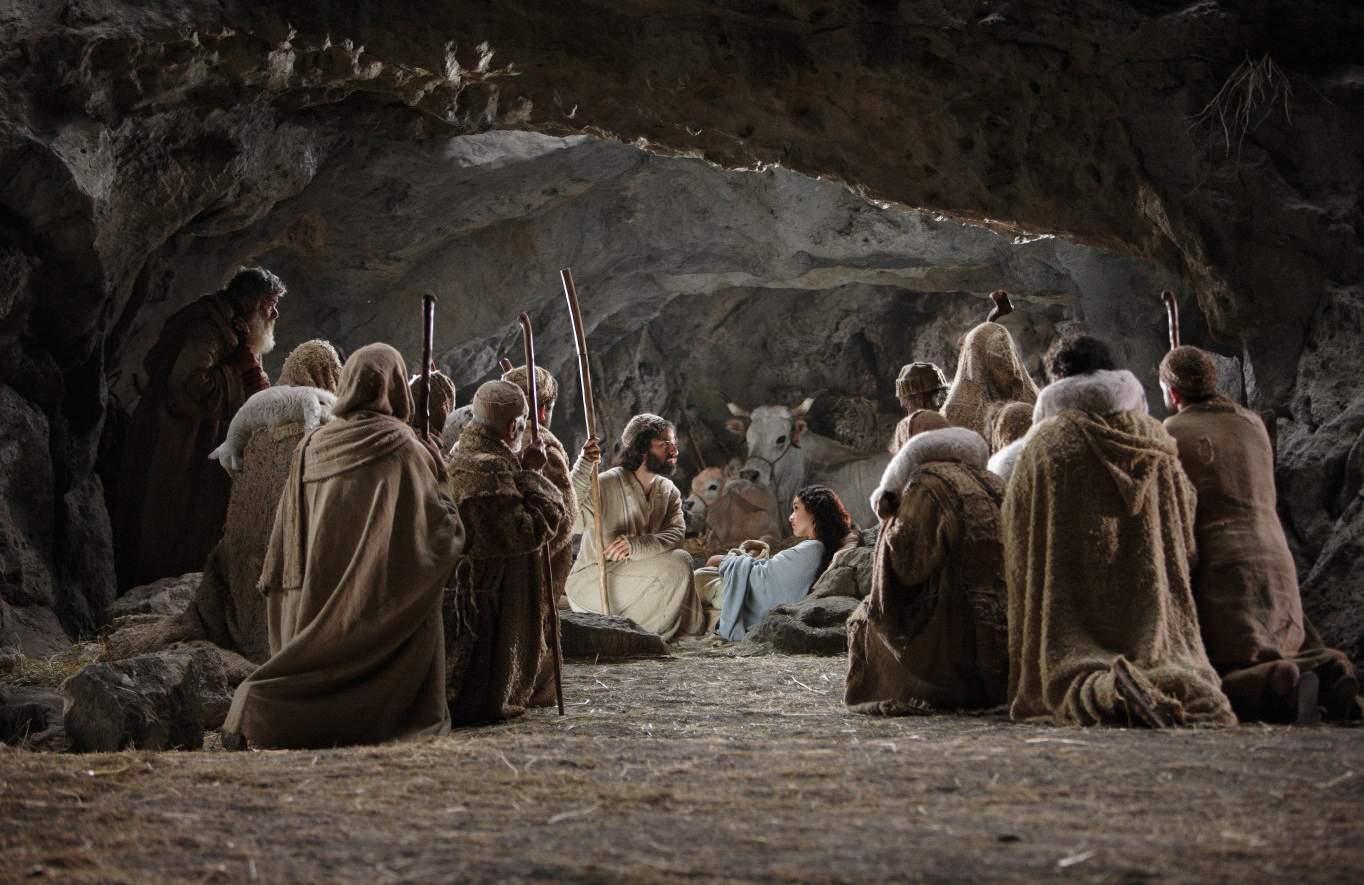
8 And in the same region there were shepherds out in the field, keeping watch over their flock by night. 9 And an angel of the Lord appeared to them, and the glory of the Lord shone around them, and they were filled with great fear. 10 And the angel said to them, "Fear not, for behold, I bring you good news of great joy that will be for all the people. 11 For unto you is born this day in the city of David a Savior, who is Christ the Lord. 12 And this will be a sign for you: you will find a baby wrapped in swaddling cloths and lying in a manger." 13 And suddenly there was with the angel a multitude of the heavenly host praising God and saying,
14 "Glory to God in the highest,
    and on earth peace among those with whom he is pleased!"
15 When the angels went away from them into heaven, the shepherds said to one another, "Let us go over to Bethlehem and see this thing that has happened, which the Lord has made known to us." 16 And they went with haste and found Mary and Joseph, and the baby lying in a manger. 17 And when they saw it, they made known the saying that had been told them concerning this child. 18 And all who heard it wondered at what the shepherds told them. 19 But Mary treasured up all these things, pondering them in her heart. 20 And the shepherds returned, glorifying and praising God for all they had heard and seen, as it had been told them. (Lk. 2:8-20)
How should we celebrate Advent and Christmas? Well, from the story of the shepherds we can learn a few things. First, the angels proclaimed the good news to the shepherds. This is remarkable considering the reputation of shepherds during this time. They were a despised cast of people in society and so mistrusted that their testimony was not admissible in legal proceedings. Yet, the angels went to them to declare the birth of the Messiah. They did not come to the rich of Bethlehem or even King Herod. They went to the shepherds. A modern equivalent might be the angels going to the homeless of Midtown Atlanta and using them as witnesses to the affluent. As we saw last Sunday, God breaks the molds of this world in many ways with the advent of Jesus. Second, the shepherds became bold witnesses for Jesus. They knew their reputation in society but they did not care. They knew the people needed to hear the good news and they were going to tell them, even if no one listened or believed them. I doubt you and I are as mistrusted in society as shepherds were at the time of Christ, so why are we not as bold in sharing the good news as they? Third and finally, the shepherds glorified and praised God for what they had seen. They not only shared the news with others, they praised God for it. We should praise God for sending Jesus every day, but Christmas should especially remind us that He is worthy of our praise for He sent Jesus to become poor so we, by His poverty, might become rich (2. Co. 8:9).

By His Grace,
Taylor

Saturday, December 22, 2012

Advent: Day 21

This week of Advent we have been looking that the covenants God made with man in the Old Testament (OT), and we have seen how they are related to one another since they are all under the one covenant of grace that Jesus fulfilled for us in His life, death, and resurrection. Remember, think of the covenant of grace as an umbrella that covers all of Scripture from the fall of Adam to the end of Revelation. The individual covenants of the OT build on each other as waves of ever-increasing revelation about the covenant of grace until they climax with Christ's fulfillment of the overarching covenant of grace. We have looked at the covenant God made with Adam and Eve after the fall, the Noahic covenant, the Abrahamic covenant (AC), the Mosaic covenant (MC), and the Davidic covenant (DC). We have seen how with each God's fellowship with man was increased and how each ultimately pointed to Jesus Himself.

Today we are going to look at the so-call "new covenant" (NC) from Jer. 31:31-34:
31 "Behold, the days are coming, declares the Lord, when I will make a new covenant with the house of Israel and the house of Judah, 32 not like the covenant that I made with their fathers on the day when I took them by the hand to bring them out of the land of Egypt, my covenant that they broke, though I was their husband, declares the Lord. 33 For this is the covenant that I will make with the house of Israel after those days, declares the Lord: I will put my law within them, and I will write it on their hearts. And I will be their God, and they shall be my people. 34 And no longer shall each one teach his neighbor and each his brother, saying, 'Know the Lord,' for they shall all know me, from the least of them to the greatest, declares the Lord. For I will forgive their iniquity, and I will remember their sin no more."
Does it fit into the unity of the previous covenants? It does. In fact, it represents the fulfillment of the earlier covenants. First and foremost, the covenantal refrain is clearly stated in Jer. 31:33, "I will be their God, and they shall be my people," connecting it to all the previous covenants. Furthermore, in Jer. 31:31-34 God promises the NC will be better than the MC but still connects the two. This NC will still have the law, but it will be written on the hearts of God's people. Just a few verses later, in Jer. 32:39-41, Jeremiah prophesies that in the NC God will "plant them in this land," clearly alluding to the promises of offspring and land in the AC and connecting the AC to the NC. In a parallel prophecy found in Eze. 37:24-26, the NC is overtly connected with the AC, the MC, and the DC in one statement:
24 My servant David shall be king over them, and they shall all have one shepherd [DC connection]. They shall walk in my rules and be careful to obey my statutes [MC connection]. 25 They shall dwell in the land that I gave to my servant Jacob, where your fathers lived [AC connection]. They and their children and their children's children shall dwell there forever [AC connection], and David my servant shall be their prince forever [DC connection]. 26 I will make a covenant of peace with them. It shall be an everlasting covenant with them [NC establishment]...
Here Ezekiel shows that in the NC all the promises of the God in the previous covenants find their fulfillment. So, the NC does not appear on the scene as something previously unknown to the people of God, but represents for them "the collation of all the old covenant promises in terms of a future expectation." (O. Palmer Robertson, Christ of the Covenants, p. 42) That future expectation was Jesus. Jesus Himself claimed this fulfillment when He instituted the Lord's Supper:
19 And he took bread, and when he had given thanks, he broke it and gave it to them, saying, "This is my body, which is given for you. Do this in remembrance of me." 20 And likewise the cup after they had eaten, saying, "This cup that is poured out for you is the new covenant in my blood." (Lk. 22:19-20, emphasis added)
It is through the NC that believers have an even greater fellowship with God. With the incarnation of Christ (what we celebrate at Christmas), God became flesh and dwelt, "tabernacled" (the literal translation) among man (Jn. 1:14). With Christ the very presence of God walked, dwelt, "tabernacled" among men. Yet, the greater fellowship of the NC does not stop there. Christ purchased salvation for the elect and through their union with Him, believers have received the Spirit of adoption as sons so that they might be able to cry out to God, "Abba! Father!" Such an intimacy and fellowship with God (calling Him the Hebrew equivalent of "daddy") would never have been imagined in the OT. Yet, the covenantal trajectory of ever-increasing fellowship and presence has another level still to come. The final stage of intimacy in the NC is yet to come. Soon Jesus will return again (in His second advent) to consummate the presence and fellowship He inaugurated in His first advent. Re. 21:1-3 describes God's presence at that time:
1 Then I saw a new heaven and a new earth, for the first heaven and the first earth had passed away, and the sea was no more. 2 And I saw the holy city, new Jerusalem, coming down out of heaven from God, prepared as a bride adorned for her husband. 3 And I heard a loud voice from the throne saying, "Behold, the dwelling place of God is with man. He will dwell with them, and they will be his people, and God himself will be with them as their God." (emphasis added)
God's covenant refrain finds is zenith in the NC. In the present age believers are adopted as sons (and daughters) of God through their union with Christ and can call God "Abba." In the new heavens and the new earth, the increasing trajectory of fellowship seen in all the previous covenants will climax when God renews all of creation and grants uninhibited, unmediated fellowship with "God Himself." He will walk and talk with His people just like He did with Adam before the fall.

This is what we celebrate at Christmas, and it is also that to which we look forward and pray for we know that the best is yet to come. When one considers God's work of redemption throughout the ages in His covenants and considers what He has done in Christ (the first advent) and will soon do in Christ (the second advent), the only proper response is praise. We should say like Paul in Ro. 11:33-36:
33 Oh, the depth of the riches and wisdom and knowledge of God! How unsearchable are his judgments and how inscrutable his ways!
34 "For who has known the mind of the Lord,
    or who has been his counselor?"
35 "Or who has given a gift to him
    that he might be repaid?"
36 For from him and through him and to him are all things. To him be glory forever. Amen.
Amen!

By His Grace,
Taylor